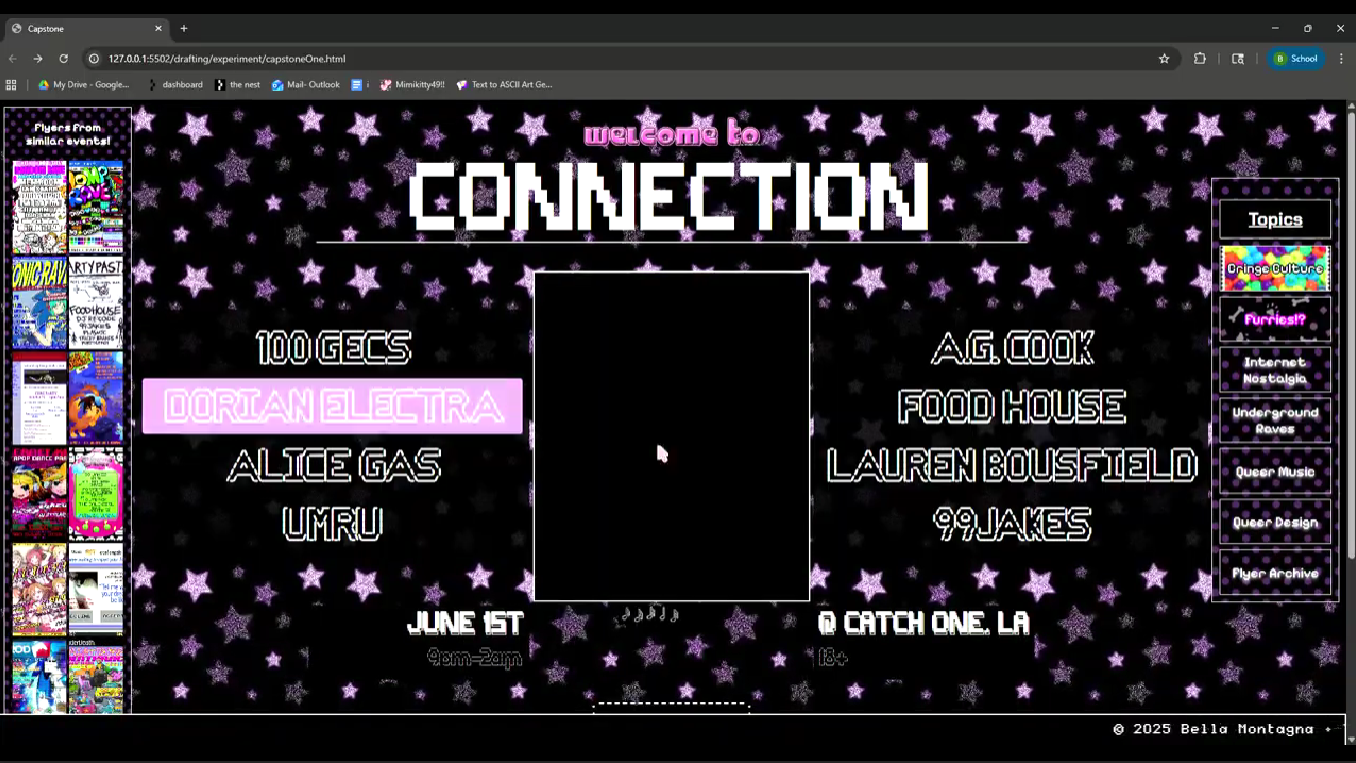
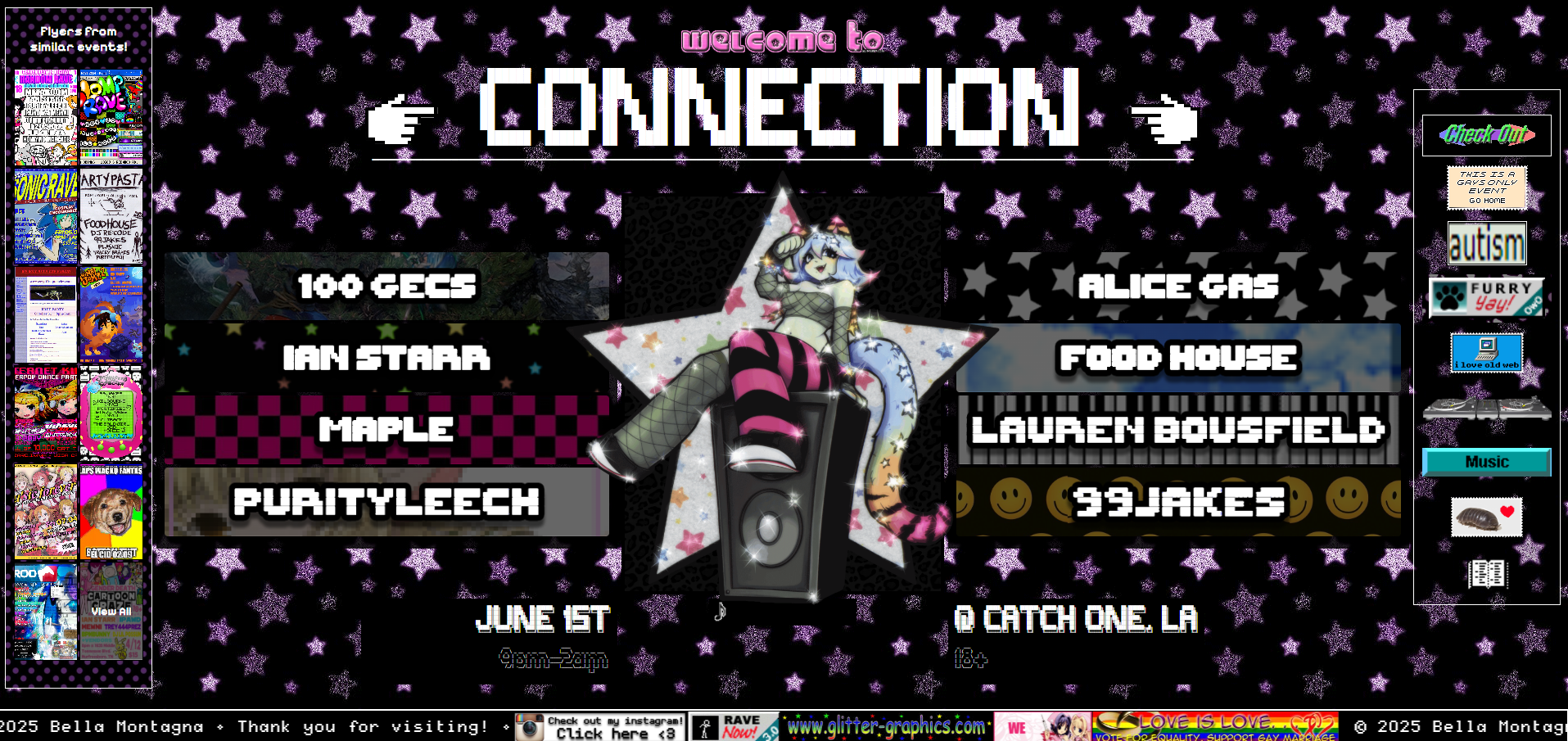
As a queer artist who grew up online, I carry a lot of nostalgia for the early Internet and have found great comfort in parties inspired by internet culture. I started going to events like Subculture Party when I was 18 and moved to LA, and there is a night and day difference between mainstream club parties and LGBTQ nightlife. I would go with my roommates in group cosplay to queer music events, even if they weren't themed, and it was the first time I felt like I wasn't the only weirdo in the room. As I continued attending parties, I made more friends, and in 2024, I started creating flyers. Since then, I have become deeply involved in the community and strive to do my best as an artist to uplift organizations like Roflcopter Party, which curate incredible LGBTQ events.
The Connection series acts as practice and guidance for my IRL promotional work, and with my previous hand-drawn flyers having been a success, I wanted to experiment with something I don't do as often: coding.
I became Professor Louis Kang's assistant for the Intro to Programming course at Otis College a year and a half ago after taking the class and loving it. My knowledge of front-end programming with HTML, CSS, and JavaScript is greater than my knowledge of back-end programming, which is why this idea of a Y2K webpage would be perfect. (Front end means the stuff you see on the webpage, back end is all the inner workings you don't see on screen.)
Old sites like Geocities were made by beginners who knew just the basics of HTML and CSS, giving them a chaotic but charming aesthetic. I wanted to combine illustration, graphic design, and front-end coding to create an experimental flyer with bright colors and GIFs that captured this nostalgic energy. Initially unsure how to host the site, I followed Louis’s recommendation to use Neocities, a modern revival of Geocities-style webpages, and got to it.
I hope you are proud of me, Professor Louis Kang.
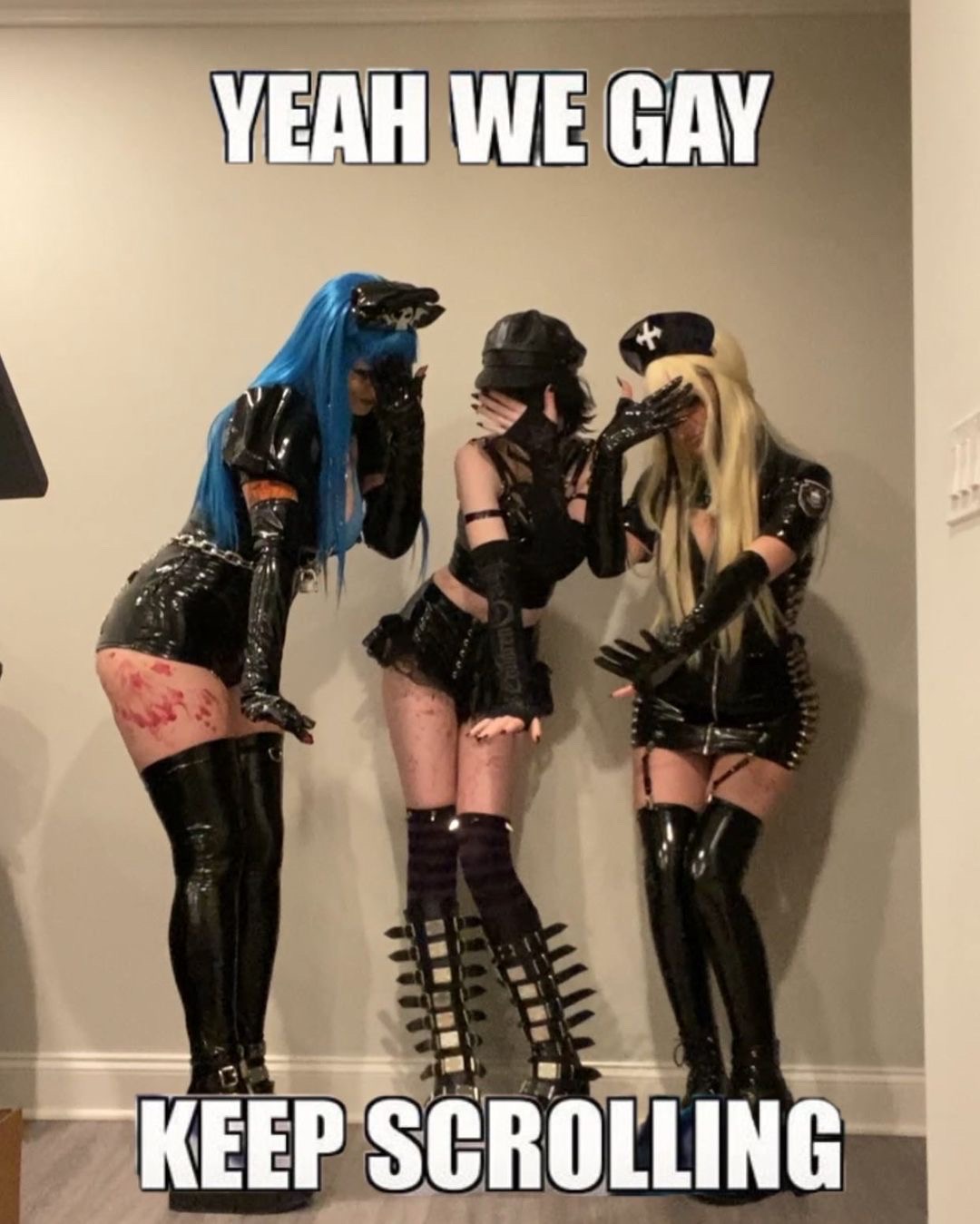
Roomates and I for Subculture Party's 4 year anniversary event October 2022 (I'm in the middle)
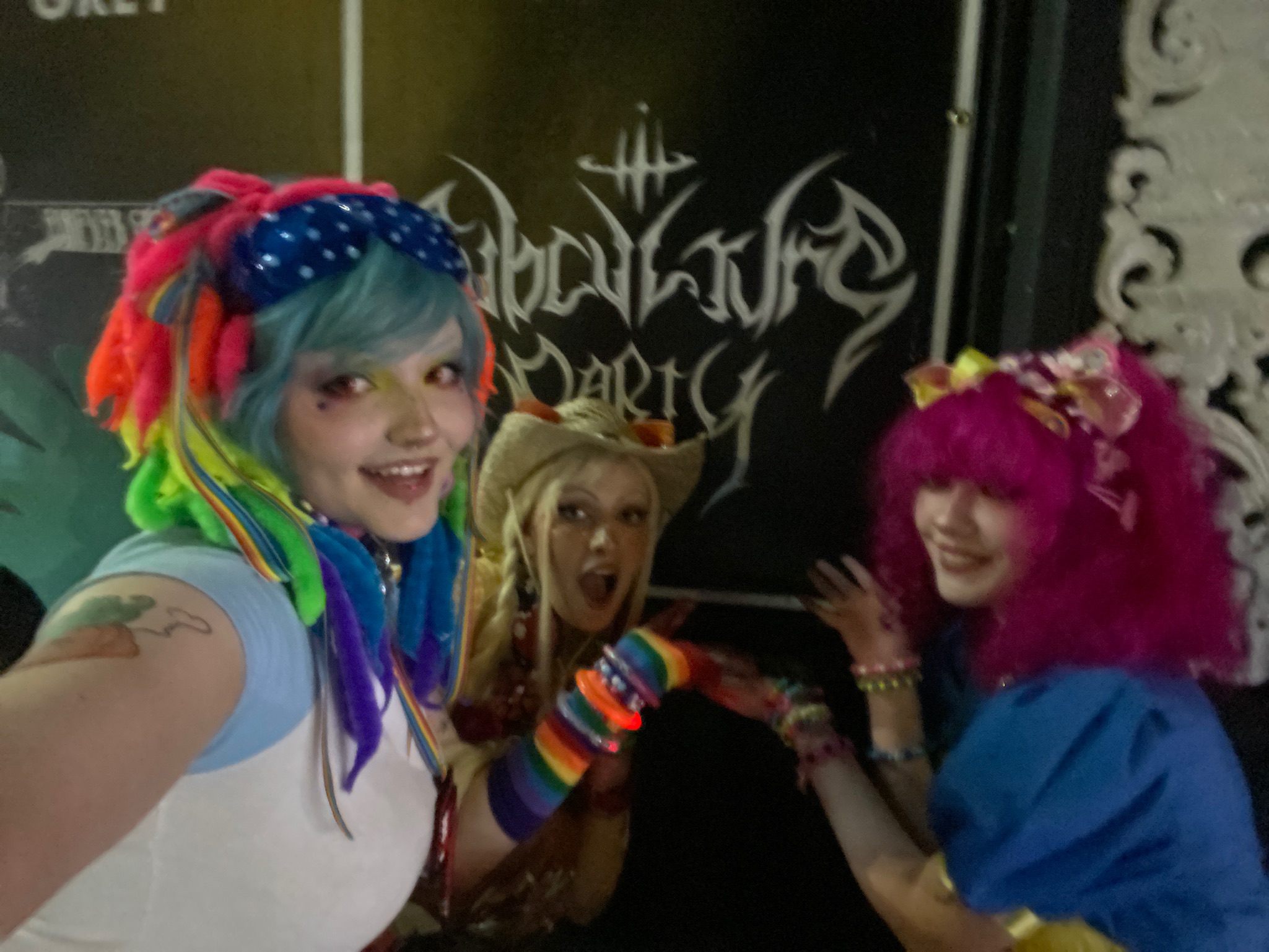
Me and my roommates dressed as Rainbow dash, Applejack, and Pinkie Pie from My Little Pony: Friendship is Magic for Subculture Party Capsoul Tour April 2022 (I'm on the right)
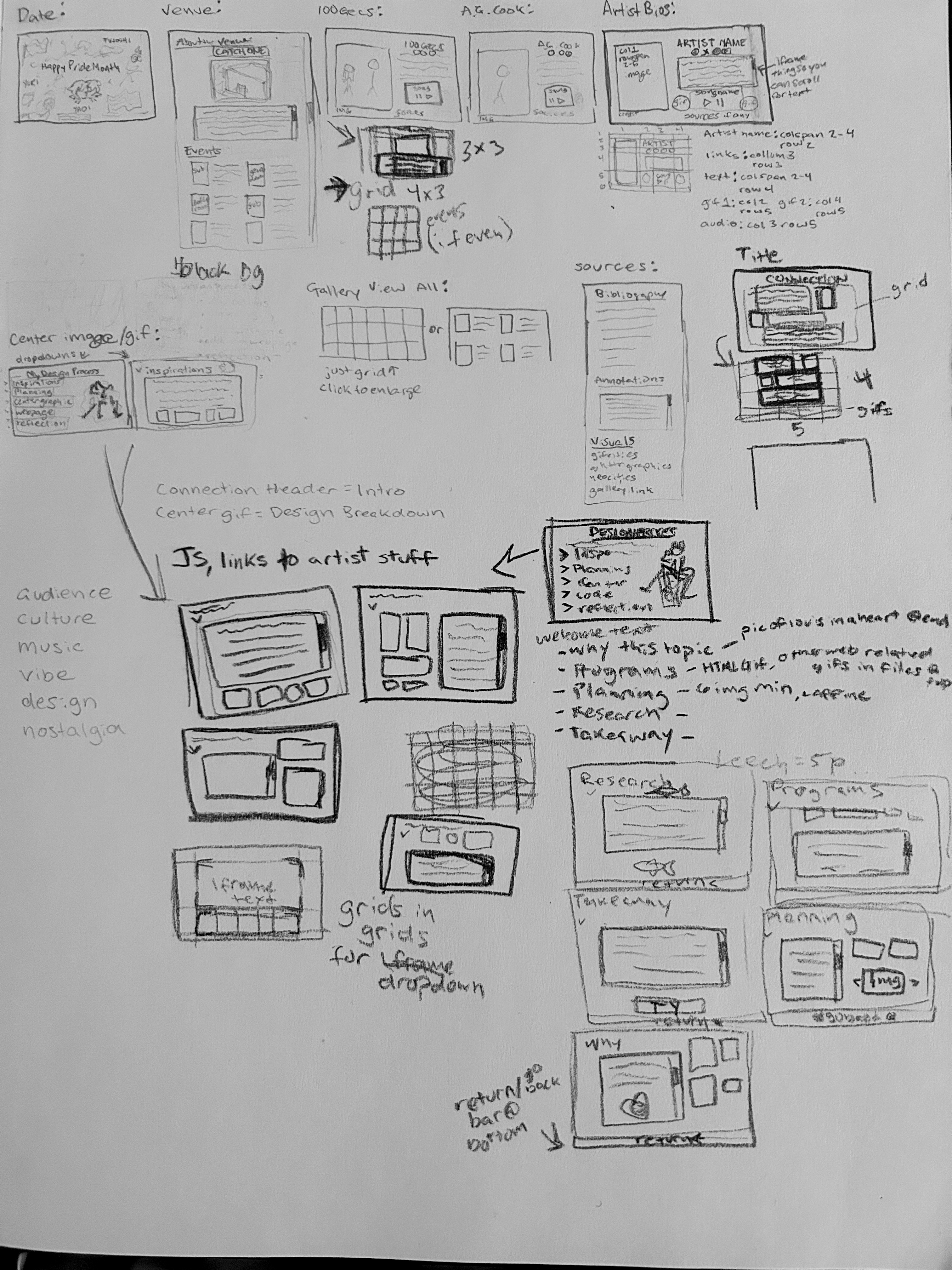
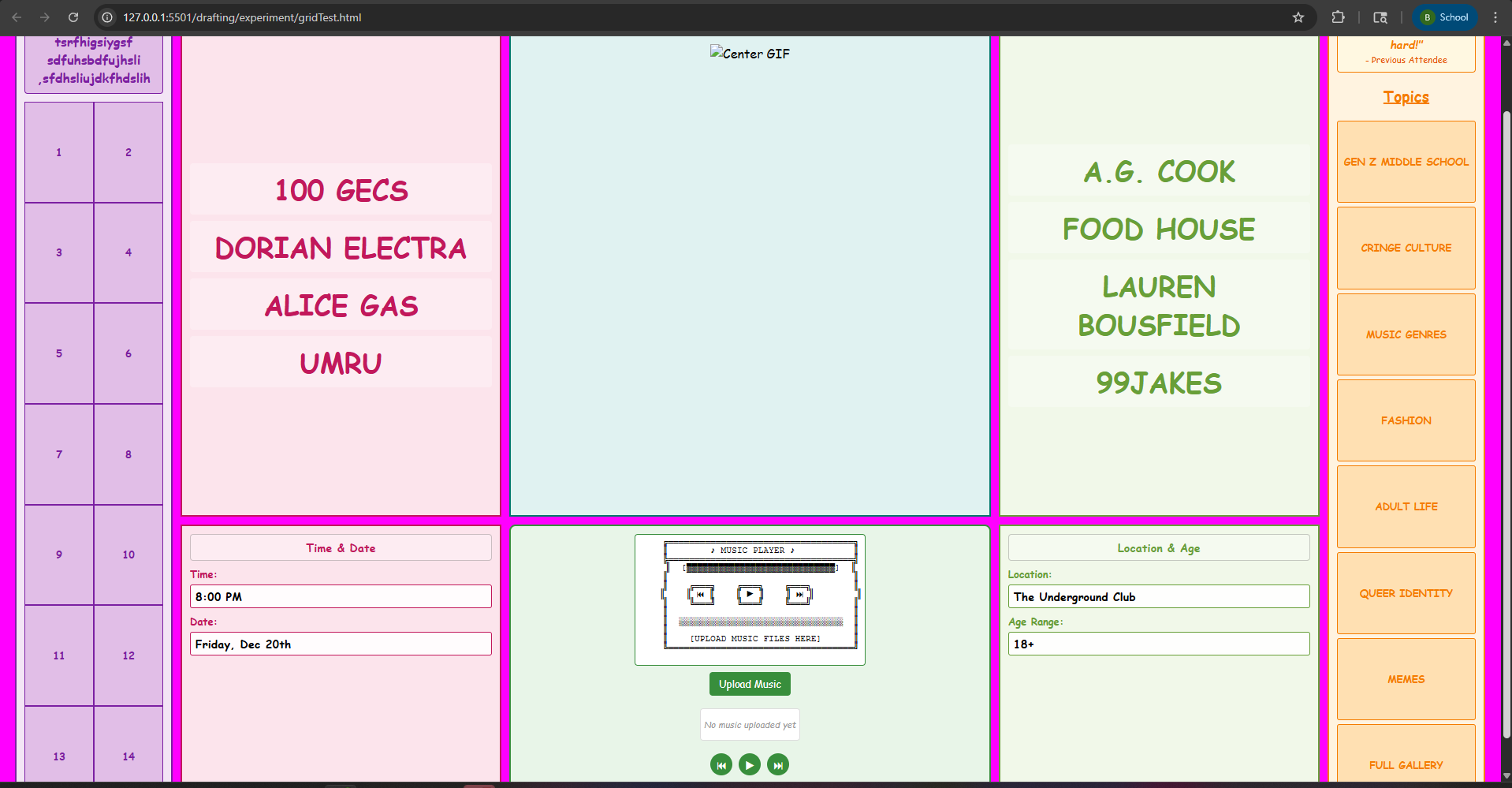
I knew I wanted this project to be an interactive webpage with moving elements to hold my text. Before writing any HTML, I sketched the layout on paper (It's much easier to plan visually.)
My inspiration came from an old 3D graphics page called DPGraph (https://dpgraph.com/), which is dizzying to look at but... interesting, in its coding: the entire page is a giant table with tables within tables. I experimented with that approach for fun but ultimately chose a grid layout to keep things manageable.
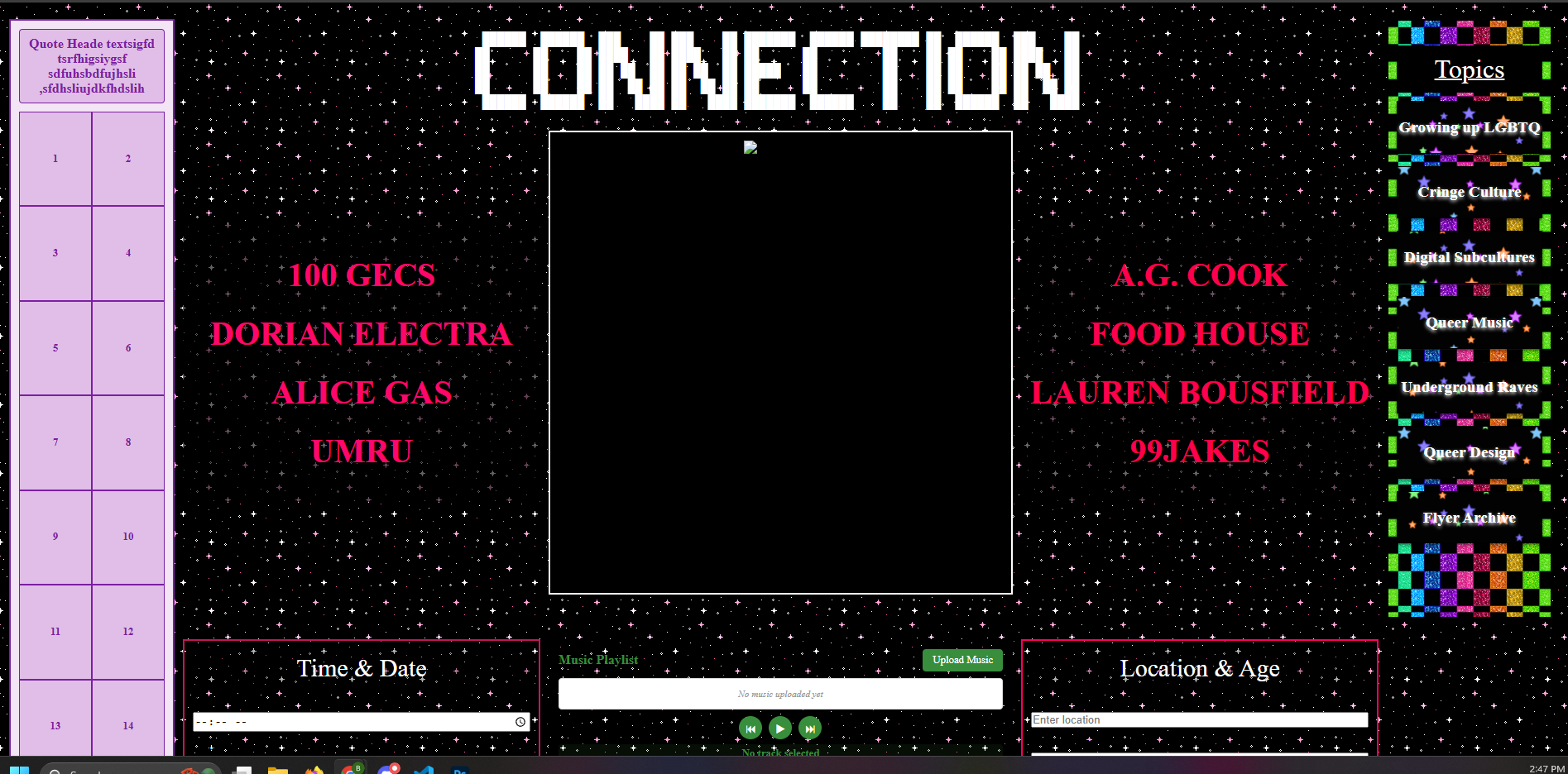
Styling the grids took a long time, especially sourcing GIFs and images. Most of my graphics came from Internet Archive Gifcities, Glitter Graphics, and a few Neocities pages which are listed in my bibliography section! Credit is tricky online, so I followed the early Internet's example of giving links to whatever page you find the image on. The early internet did not concern itself with copyright infringement; everything was fair game in the eyes of personal webpages.
The page layout has a gallery bar on the left, a large GIF of my art in the center, and a topic bar on the right. In the "Furries?!" section, I explain the character featured on the front page. Around the center GIF, musician names appear in clickable boxes that open iframe popups with bios. The gallery bar displays flyers from the IRL events inspiring this project. There are also numerous small interactive elements scattered throughout the site—too many to list—so I encourage exploring the page for yourself!
The research portion of this took an equal, if not longer, amount of time to complete than the writing and creation. Finding credible sources on such an incredibly niche, underrepresented topic was no easy task.
I went through the on-campus Otis library and all the online databases we can access to find relevant scholarly sources, which are listed in the bibliography section of this page.
I learned a lot from this project, both artistically and psychologically. The reasoning behind Gen Z queer nostalgia for the early internet is something I always understood intuitively but had never articulated. Researching and writing about it pushed those instinctive feelings I had into clearer, concrete ideas. I especially valued the conversations I had with the musicians I contacted. Conversations about these topics are rarely discussed because they feel "obvious" to people within the community. Hearing the musicians' perspectives not only affirmed my own but also brought up those unspoken understandings into a shared, explicit conversation.
My biggest takeaway from this project is that when it comes to promotional material for underground queer parties, the theme itself isn't what matters. What matters is that people feel seen. The early internet resonates so deeply in the queer Gen Z community because it held pieces of ourselves we only shared with each other. Nostalgia for that era becomes a form of recognition to say, "I saw who you were then. I see who you are now." Our shared past creates trust in the present.